Planning · Sunshine Coast
Development.i Sunshine Coast: how developers can research nearby approvals
How Sunshine Coast developers can use Development.i to research nearby approvals, property information, precedent, conditions and civil design clues.
Project question?
Check the civil constraints before committing to your next step.
Send CivilCity the address, current plans, approval stage and the issue you are trying to resolve. We will help scope the right civil engineering input for the project.
Short answer
Development.i is one of the most useful early research tools for Sunshine Coast development sites. It lets you search development and building applications, property information, nearby proposals and approval history.
For developers, it is not just a planning tool. It can also reveal civil engineering clues.
What to look for
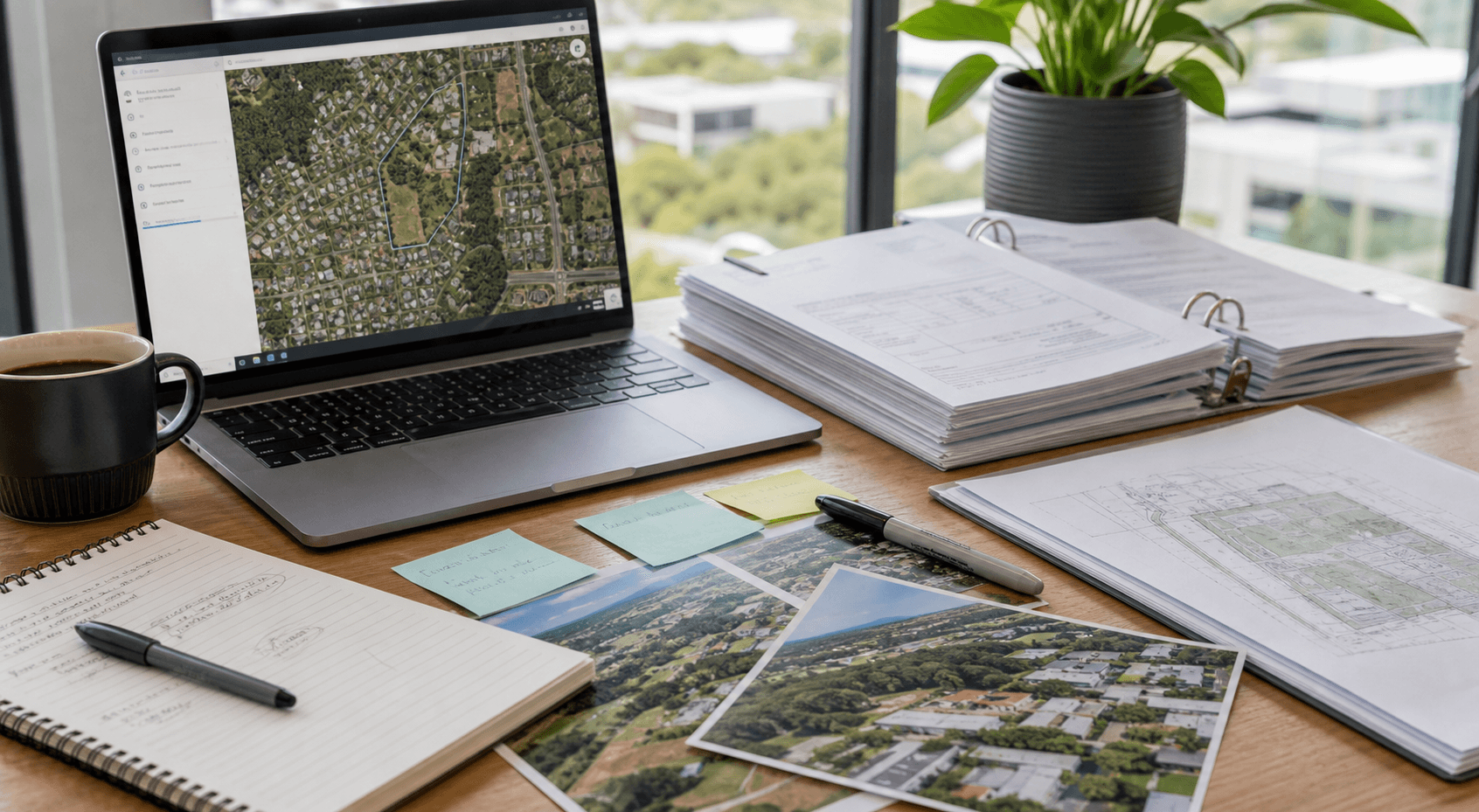
Search the subject site and surrounding streets. Look for reconfiguring a lot approvals, material change of use approvals, operational works, plan sealing, conditions, decision notices, supporting reports and drawings where available.
Nearby applications can show how council has treated access, stormwater, parking, frontage works, flooding, easements and servicing issues in the same local context.
How to read approvals like a developer
Do not only ask what was approved. Ask what conditions were attached, what information was requested, what changed between lodgement and approval, and whether operational works or plan sealing steps followed.
A nearby approval with heavy civil conditions may be a signal that your site needs similar allowances.
Mistakes to avoid
Do not assume that a nearby approval creates an automatic right for your site. Controls change, site constraints differ, and one approval may have depended on specific facts.
Use Development.i to identify questions, then test those questions against your own site.
Build a comparable-approval note that can be checked
Start with the subject property and record the application reference, type, status and decision documents. Then select nearby applications because their constraints resemble yours, not simply because they show a desirable dwelling count. A flat corner site with two road frontages is a weak comparison for a sloping rear lot. Read the approved plans and conditions together, and check whether later changes altered the outcome. Development.i provides research leads; your team still needs to assess the current controls and your particular proposal.
| Decision or stage | Evidence to check | Practical outcome |
|---|---|---|
| Application status | Decision and any later change documents. | A lodged proposal is not an approved outcome. |
| Comparable constraints | Frontage, slope, drainage and intended use. | Record the differences that limit the comparison. |
| Delivery obligations | Civil conditions and associated applications where available. | Identify likely investigations and cost categories. |
A research note should show why an approval is comparable
For each useful application, write a short note with its reference, decision date, approved use or lot outcome, access arrangement and drainage conditions. Add one sentence explaining what differs from your site. For example, the neighbouring project may discharge to a different street or may have secured an easement that your property lacks. Read related amendments before relying on the original plan. Give the consultant team a small set of relevant examples with these notes, rather than a large folder of undifferentiated downloads. This makes the research useful for scoping investigations without presenting another owner’s approval as a precedent that guarantees yours.
Checklist for your project brief
Use these points to define the next investigation or consultant deliverable.
- Keep application references and links with a short note explaining why each is relevant. A screenshot without context is hard for the consultant team to evaluate.
- Read conditions for drainage, access and frontage works as well as the approved yield. These obligations can explain why a superficially similar project costs more.
- Mark unavailable or unclear information as unknown. Absence of a public document is not evidence that a requirement was waived or that work was completed.
How CivilCity helps
CivilCity can review nearby approvals for civil engineering clues and help translate them into feasibility risk for your site.
This can be especially useful before buying a property, preparing a subdivision concept or responding to approval conditions.
Common questions
What is Development.i?
Sunshine Coast Council says Development.i provides access to past and current application details and basic property information for the Sunshine Coast local government area.
Why should developers research nearby approvals?
Nearby approvals can reveal common conditions, assessment issues, drainage constraints, access expectations and local development patterns.
Can Development.i prove my project will be approved?
No. It helps with context and precedent, but each site still needs current planning, engineering and approval advice.
Official sources and further guidance
- Development.i
- Development.i site report
- Development.i what information is available
- Current Sunshine Coast Planning Scheme
Use the current requirements for your property and proposal. Illustrative scenarios describe possible design issues; they are not reported client projects.
Discuss your project
Early civil engineering advice
Share the site report and concept to identify the civil investigations that matter.