
Earthworks · Sunshine Coast
Acid sulfate soils overlay Sunshine Coast: earthworks and development risk
A plain-English guide to acid sulfate soils overlay checks on the Sunshine Coast, including excavation, filling, low-lying land and development application risk.
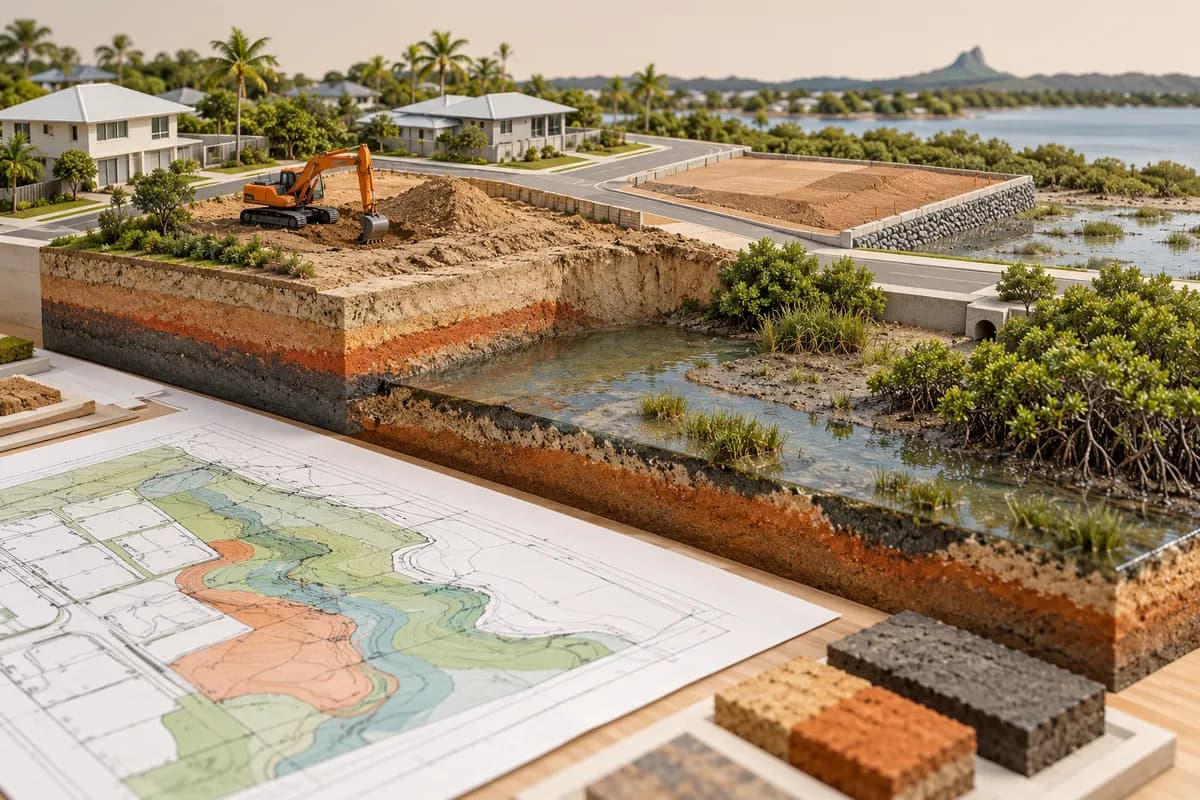
Concept illustration
Project question?
Check the civil constraints before committing to your next step.
Send CivilCity the address, current plans, approval stage and the issue you are trying to resolve. We will help scope the right civil engineering input for the project.
The hidden risk below the nice flat site
Flat coastal land can look easy until earthworks, filling or service trenches trigger acid sulfate soils considerations. On the Sunshine Coast, the Acid sulfate soils overlay is one of those constraints buyers and small developers often notice too late.
The Sunshine Coast Planning Scheme includes Part 8 Acid sulfate soils overlay material and Part 5 assessment triggers. The overlay mapping references Area 1 land at or below 5m AHD and Area 2 land above 5m AHD and below 20m AHD.
Check the disturbance, not just the map
Ask the planner and soil specialist to check the current overlay provisions against the proposed excavation, filling and dewatering. Location, elevation, disturbance volume and depth can all matter. A site-wide bulk earthworks figure may overlook deep local trenches or drainage structures.
Prepare an earthworks sketch identifying where material will be excavated, stockpiled, reused or taken off site. This lets the specialist scope investigation around the actual works instead of a generic description of the property.
Why civil design matters
Acid sulfate soils can affect earthworks methodology, site levels, trenching, dewatering, treatment, construction cost and reporting. The civil design should understand the likely cut and fill volumes before the project assumes the overlay is a minor paperwork item.
Consider shallower service routes or revised levels where feasible. Obtain specialist advice before disturbing suspect material, so treatment, testing and disposal can be included in the tender scope.
What to check before purchase or DA
Review the Development.i report, overlay mapping, approximate AHD levels, proposed earthworks volumes, service routes and whether the development needs deep excavation. If the site sits in low-lying coastal areas, do not skip the check just because the land looks simple.
If triggers are likely, the project may need specialist soil investigation and an acid sulfate soils management approach.
Bring investigation findings into the contractor’s scope
A soil investigation has limited value if the construction package does not explain how its findings affect excavation, stockpiling, water management and disposal. Ask the environmental or geotechnical specialist to define the appropriate management and verification requirements. The civil team can then coordinate levels and trench routes with that advice. A shallow overall cut does not rule out a deeper local disturbance at a drainage pit or sewer connection. Identify those locations before tender rather than discovering the scope during excavation.
| Decision or stage | Evidence to check | Practical outcome |
|---|---|---|
| Investigation | Proposed disturbance locations and depths. | Target the assessment to actual construction activity. |
| Design response | Possible level or alignment changes. | Compare options that reduce avoidable disturbance. |
| Construction controls | Specialist management, testing and disposal requirements. | Make responsibilities and allowances visible in the tender. |
Check local excavations within an otherwise shallow project
A development with modest overall earthworks may still include deeper pits, connections or trenches. Ask the civil designer to identify those local depths for the specialist, along with likely groundwater interaction and temporary excavations. The investigation and management scope should follow the actual disturbance. If a service connection moves after the assessment, notify the specialist rather than assuming the earlier advice applies unchanged. Capture any revised requirements in the contractor’s instructions and closeout records so the final evidence reflects the work actually carried out.
Checklist for your project brief
Use these points to define the next investigation or consultant deliverable.
- Provide preliminary earthworks quantities and service trench information to the specialist, with assumptions clearly marked.
- Ask how suspect material and water will be managed if encountered outside the investigated area. Include the escalation process in the works scope.
- Keep verification records with the closeout file. Confirm the specialist’s required evidence before material is moved or covered.
How CivilCity helps
CivilCity can test early earthworks implications, coordinate with geotechnical or environmental specialists, and shape civil design to reduce avoidable excavation, filling and construction risk.
Common questions
What is Area 1 in the acid sulfate soils overlay?
The Sunshine Coast Planning Scheme refers to Area 1 as land at or below 5 metres AHD. Always check the current overlay mapping for the specific site.
Can a small project trigger acid sulfate soils assessment?
It can if excavation, filling, trenching or other disturbance meets relevant triggers or occurs in sensitive mapped areas.
Who should check this before construction?
A planner, civil engineer and, where needed, geotechnical or environmental specialist should review the overlay and proposed earthworks.
Official sources and further guidance
Use the current requirements for your property and proposal. Illustrative scenarios describe possible design issues; they are not reported client projects.
Discuss your project
Civil design and documentation
Send survey, proposed levels and specialist reports to coordinate the civil design.